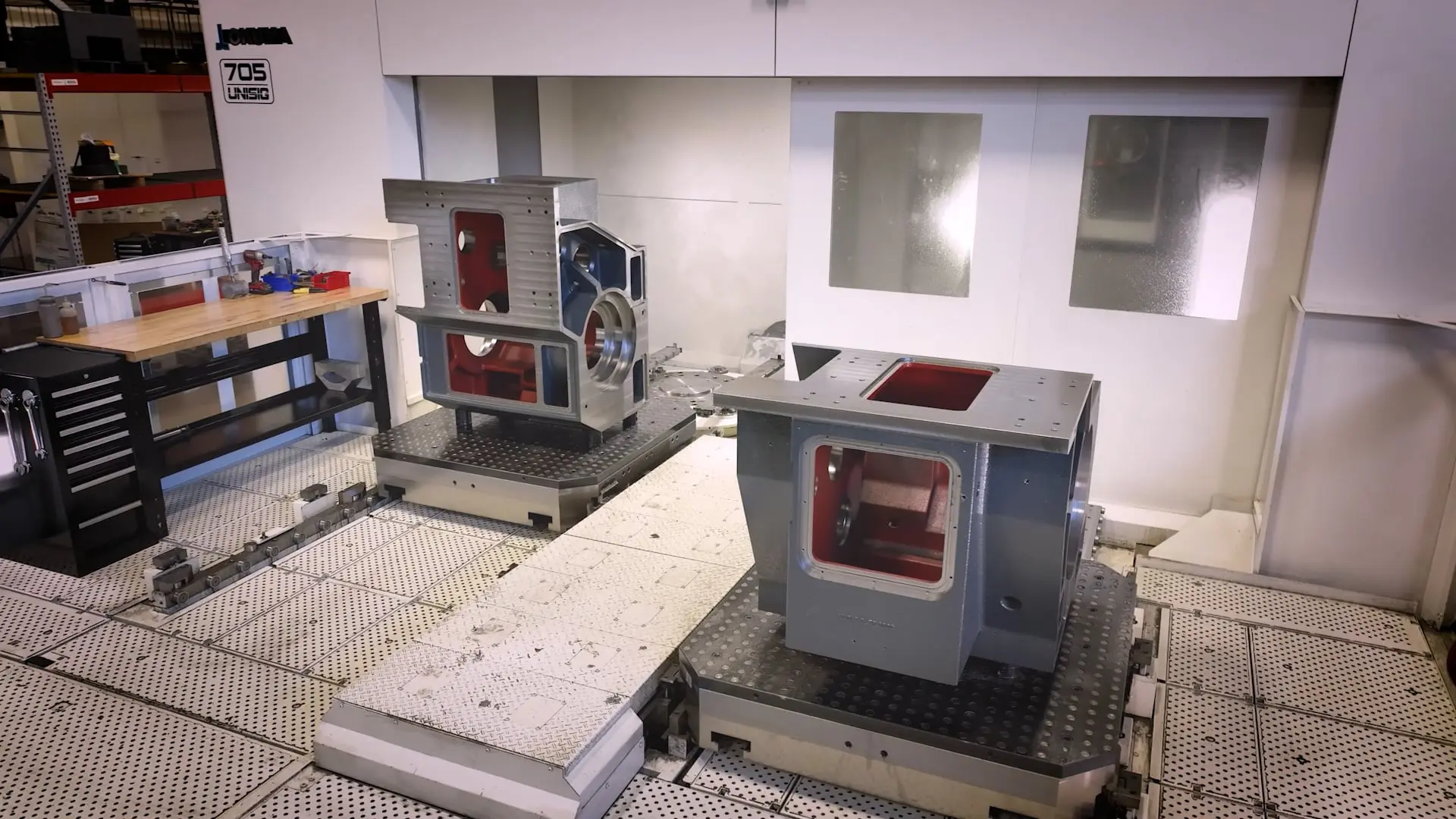
We want our machines to look good while they age. Part of our strategy for this is to use a two-component polyurethane enamel to paint our base castings, structural frames, machine enclosures, or any fabricated metal parts in our machines. Recently, we targeted our painting department for investment to keep up with our growing company and expanding product line.
12

Nov

PAINT BOOTH INVESTMENT: PRECISION PAINTING FOR UNISIG MACHINES

Paint Booth interior

UNISIG machines are designed to run for 20 years or more in production. While operating, the machines are exposed to factory conditions that are not ideal for precision machinery. Cutting fluid—whether straight oil or water-soluble—contains extreme pressure (EP) additives that improve tool performance but can degrade or damage seals and paint on the machines over time. We want our machines to look good while they age. Part of our strategy for this is to use a two-component polyurethane enamel to paint our base castings, structural frames, machine enclosures, or any fabricated metal parts in our machines. Recently, we targeted our painting department for investment to keep up with our growing company and expanding product line. Our goals for investment were clear:

  • Improve the shop environment in the painting area
  • Improve the quality of the finished product
  • Increase the dimension of parts we could paint
  • Reduce the amount of paint used and wasted
  • Increase the productivity in painting
  • Increase the throughput in the paint department

Manufacturing engineers researched the technology available, and as in most cases in manufacturing, we were even more excited about the project after learning what was possible.

DIMENSIONS AND INTERIOR

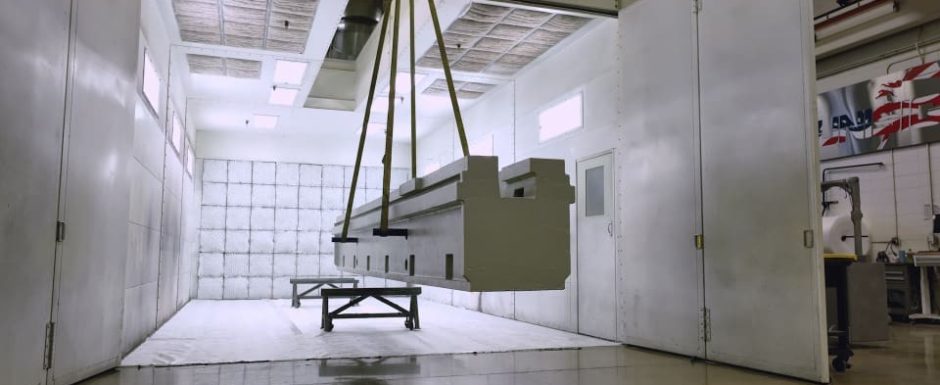
The paint booth’s workspace measures 16 feet wide by 30 feet deep, allowing us to paint large single components—such as machine bases and columns—or groups of smaller enclosure parts.

To handle large workpieces efficiently, the booth features a crane access slot in the roof that automatically opens for a bridge crane to place components, then closes and seals for painting.

Bright, well-planned lighting ensures clear visibility during painting and inspection, supported by targeted task lighting for detail work. Floors and walls are maintained regularly to preserve brightness and the overall quality of the painting environment.

“It’s an investment in long-term quality, efficiency, and the appearance of every UNISIG machine that leaves our facility.”

DIMENSIONS AND INTERIOR

The paint booth’s workspace measures 16 feet wide by 30 feet deep, allowing us to paint large single components—such as machine bases and columns—or groups of smaller enclosure parts.

To handle large workpieces efficiently, the booth features a crane access slot in the roof that automatically opens for a bridge crane to place components, then closes and seals for painting.

Bright, well-planned lighting ensures clear visibility during painting and inspection, supported by targeted task lighting for detail work. Floors and walls are maintained regularly to preserve brightness and the overall quality of the painting environment.

“It’s an investment in long-term quality, efficiency, and the appearance of every UNISIG machine that leaves our facility.”

Paint Selection

AIR HANDLING AND PAINT MIXING

Once the basic dimensions and working areas were defined, we specified a makeup air unit that draws in fresh air, filters it, and exhausts it to the outside. The system also heats and conditions the air to maintain optimal painting temperatures, then provides a curing cycle that raises the booth temperature for an hour after painting before rapidly cooling the parts. The air handling aspect of this project improved our throughput significantly because we can handle the painted items soon after painting. It also eliminated any odors from curing, which improved the working environment in and around the painting department.

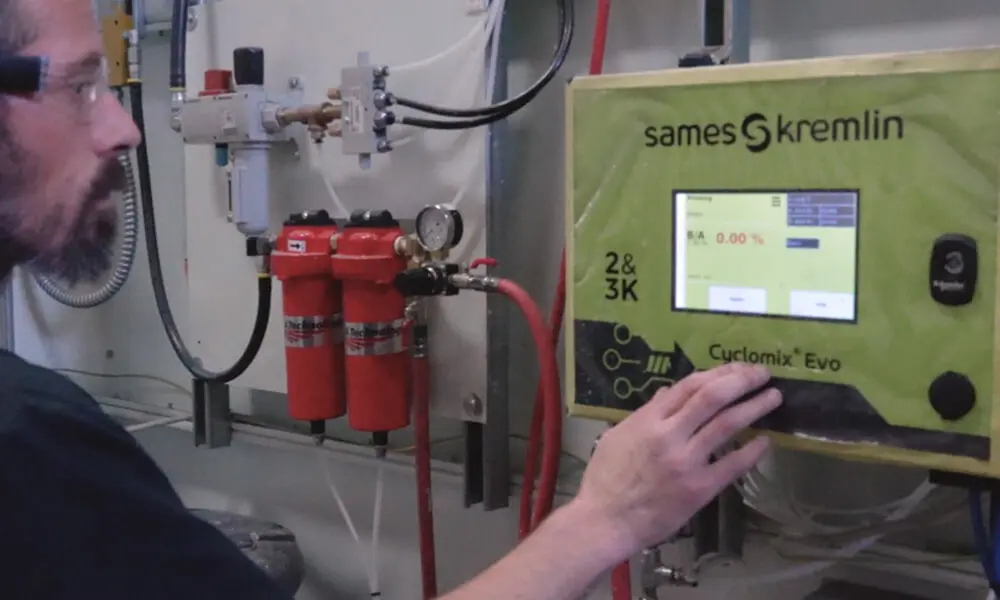
The high-tech enamel applied to UNISIG machines is not cheap, and the formulation of the two parts must be carefully measured, or the result will not be consistent. UNISIG manufacturing engineers added an automatic mixing system to the project to precisely meter the individual components near the painting gun. This assures the exact mix is used, but also drastically reduces wasted paint. Our painting technicians have bulk color components in different pots, and choosing the paint color is as simple as pressing a button on the touch screen. Solvent for cleaning the gun or prepping the workpieces is also available as a selection on the control.

TRAINING, MAINTENANCE, AND CONTINUOUS IMPROVEMENT

The final step was training our team on the new technology and changing the expectations of what was possible. A regular maintenance schedule is followed, and paint quality is constantly evaluated as we continue to improve our painting performance. This investment represents more than a new paint booth—it’s an investment in long-term quality, efficiency, and the appearance of every UNISIG machine that leaves our facility.

AIR HANDLING AND PAINT MIXING

Paint Selection

Once the basic dimensions and working areas were defined, we specified a makeup air unit that draws in fresh air, filters it, and exhausts it to the outside. The system also heats and conditions the air to maintain optimal painting temperatures, then provides a curing cycle that raises the booth temperature for an hour after painting before rapidly cooling the parts. The air handling aspect of this project improved our throughput significantly because we can handle the painted items soon after painting. It also eliminated any odors from curing, which improved the working environment in and around the painting department.

The high-tech enamel applied to UNISIG machines is not cheap, and the formulation of the two parts must be carefully measured, or the result will not be consistent. UNISIG manufacturing engineers added an automatic mixing system to the project to precisely meter the individual components near the painting gun. This assures the exact mix is used, but also drastically reduces wasted paint. Our painting technicians have bulk color components in different pots, and choosing the paint color is as simple as pressing a button on the touch screen. Solvent for cleaning the gun or prepping the workpieces is also available as a selection on the control.

TRAINING, MAINTENANCE, AND CONTINUOUS IMPROVEMENT

The final step was training our team on the new technology and changing the expectations of what was possible. A regular maintenance schedule is followed, and paint quality is constantly evaluated as we continue to improve our painting performance. This investment represents more than a new paint booth—it’s an investment in long-term quality, efficiency, and the appearance of every UNISIG machine that leaves our facility.

FREQUENTLY ASKED QUESTIONS

UNISIG machines are built to perform for decades in production environments, often exposed to cutting fluids and other challenging factory conditions. The investment into advanced paint technology helps protect critical components, maintain a professional appearance, and ensure long-term durability.

The upgraded booth allows UNISIG to paint larger machine components with greater precision and efficiency. It features improved lighting, controlled air handling, and a crane access system for handling large parts—resulting in higher quality finishes and increased throughput.

The automatic mixing system precisely controls the two components of the polyurethane enamel at the spray gun. This ensures a perfect mix every time, reduces paint waste, and gives painters better control over color selection and solvent use—all contributing to consistent, high-quality finishes.

Automation is part of our DNA at UNISIG. Many of our deep hole drilling machine projects include some level of automation, and we think about it at every step of development. This approach allows us to offer customers automation options with their initial purchase or as a future upgrade, ensuring their investment is compatible with automated production.
04

Nov

WHAT DOES IT MEAN TO BUILD AUTOMATION?

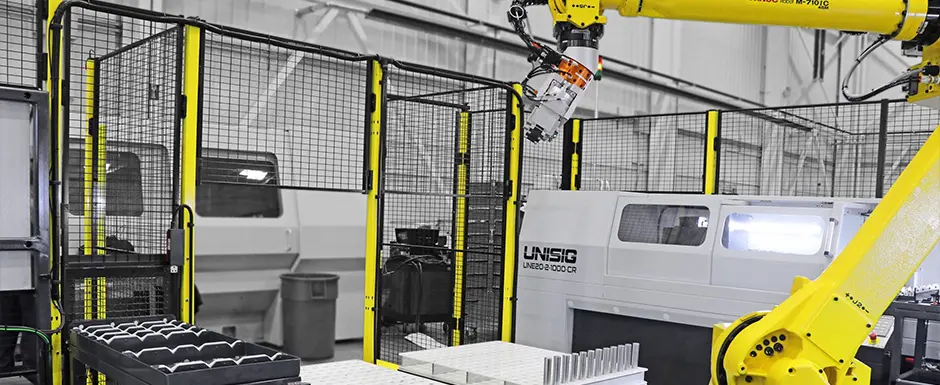
Automation Gundrilling Cell

Automation is part of our DNA at UNISIG. Many of our deep hole drilling machine projects include some level of automation, and we think about it at every step of development. This approach allows us to offer customers automation options with their initial purchase or as a future upgrade, ensuring their investment is compatible with automated production.

UNISIG machines are servo-driven and equipped with programmable feed rates, positions, and spindle speeds that optimize production. Many models also include servo-driven workpiece positioning systems that automatically prepare the machine for the next part. The user interface clearly shows the machine’s position and cycle status, making it simple for operators to complete one cycle and start the next.

Before automating a machine, the drilling operation itself must be stable and controlled. UNISIG’s process monitoring system tracks drilling conditions in real time and can automatically adjust parameters to maintain cycle performance. When limits are reached, the machine interrupts operation to protect the tool and workpiece while communicating what fault caused the stoppage. This feedback helps operators fine-tune parameters for successful drilling and establish tool life settings for high-volume production.

INTEGRATED AUTOMATION: BUILT FOR EFFICIENCY

Not every automated system requires a robot moving parts around. In-machine automation, such as smart conveyors, indexing pallets, and bulk feeders, can provide fully automated operation within a compact footprint. These integrated systems are often designed to ship with the machine as a single unit, ready for production.

UNISIG also offers “robot-ready” machines. Depending on the model, this can include communication protocols, automatic doors, powered fixturing, and presence sensors. These features simplify future robot integration while making manual operation more efficient for the operator.

“Automation is never an afterthought. It is built in from the very beginning.”

INTEGRATED AUTOMATION: BUILT FOR EFFICIENCY

Not every automated system requires a robot moving parts around. In-machine automation, such as smart conveyors, indexing pallets, and bulk feeders, can provide fully automated operation within a compact footprint. These integrated systems are often designed to ship with the machine as a single unit, ready for production.

UNISIG also offers “robot-ready” machines. Depending on the model, this can include communication protocols, automatic doors, powered fixturing, and presence sensors. These features simplify future robot integration while making manual operation more efficient for the operator.

“Automation is never an afterthought. It is built in from the very beginning.”

READY-ENGINEERED SYSTEMS: PROVEN AND SCALABLE

Standardized automation solutions make it easy for customers to say yes to automation, even without prior experience. UNISIG’s pre-engineered, proven automation eliminates unnecessary risk and development cost. We ask the right questions to help customers avoid common pitfalls and deliver automation systems that enhance productivity and competitiveness.

When multiple machines are connected in an automated system, centralized control simplifies operation and setup. The UNISIG Automation Cell Controller (ACC) provides a single interface that displays operation screens from every UNISIG machine in the cell, along with the robot sequence and parameters for the next job change.

ADVANCED EXPERTISE: SIMPLE UPGRADES TO COMPLEX CELLS

UNISIG has decades of experience designing and integrating automation, from ultra-high-speed systems that drill millions of parts per year to heavy-duty cells that move 25-ton workpieces. We collaborate closely with customers to understand their goals, develop practical automation solutions, and stand behind every system we deliver.

Building automation is not just about adding technology. It is about engineering smarter, more capable systems that evolve with our customers’ needs. At UNISIG, automation is never an afterthought. It is built in from the very beginning.

READY-ENGINEERED SYSTEMS: PROVEN AND SCALABLE

Standardized automation solutions make it easy for customers to say yes to automation, even without prior experience. UNISIG’s pre-engineered, proven automation eliminates unnecessary risk and development cost. We ask the right questions to help customers avoid common pitfalls and deliver automation systems that enhance productivity and competitiveness.

When multiple machines are connected in an automated system, centralized control simplifies operation and setup. The UNISIG Automation Cell Controller (ACC) provides a single interface that displays operation screens from every UNISIG machine in the cell, along with the robot sequence and parameters for the next job change.

ADVANCED EXPERTISE: SIMPLE UPGRADES TO COMPLEX CELLS

UNISIG has decades of experience designing and integrating automation, from ultra-high-speed systems that drill millions of parts per year to heavy-duty cells that move 25-ton workpieces. We collaborate closely with customers to understand their goals, develop practical automation solutions, and stand behind every system we deliver.

Building automation is not just about adding technology. It is about engineering smarter, more capable systems that evolve with our customers’ needs. At UNISIG, automation is never an afterthought. It is built in from the very beginning.

FREQUENTLY ASKED QUESTIONS

UNISIG offers a range of automation options, including in-machine conveyors, pallet systems, bulk feeders, robot integration, and multi-machine automation cells managed by the UNISIG Automation Cell Controller (ACC).

No. UNISIG provides ready-engineered and proven automation solutions. Our team guides customers through setup and operation to ensure a smooth transition into automated production.

Yes. Many UNISIG machines are designed to be automation-ready from the start, allowing customers to add automation systems as production needs grow.

UNISIG designs and builds deep hole drilling machines and automation systems. We provide the latest tools, equipment, and technology so our skilled team can take pride in their work and enjoy producing high-precision machines. One of those tools is our hand-held laser welder.
29

Jul

How Laser Welding is Changing Fabrication

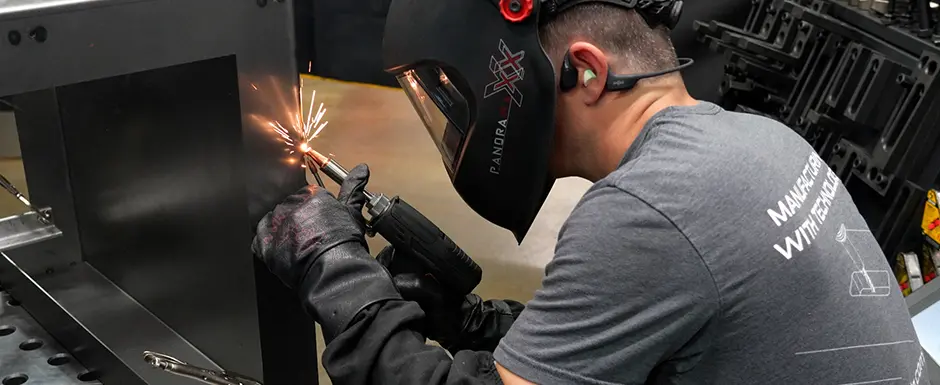
UNSIG welder using hand held laser welding technology

ADVANCING FABRICATION WITH LASER WELDING

UNISIG designs and builds deep hole drilling machines and automation systems. We provide the latest tools, equipment, and technology so our skilled team can take pride in their work and enjoy producing high-precision machines. One of those tools is our hand-held laser welder. We fabricate machine enclosures and other components that require long, watertight, clean welds. Our team of welders has used the latest MIG and TIG welding technologies to deliver high-quality results. When laser welding became viable, we saw its potential, but it took planning and preparation to bring it online. 

Better Welds, Faster

Our Fab Shop Manager evaluated the technology, chose the equipment, and brought one of our welders with him for training. Safety is a priority at UNISIG. While we waited for delivery, we engineered and built a custom welding enclosure (including the door and electronic interlocks) to exceed safety standards for laser welding and fit perfectly in our space.

We still use MIG for heavy plate and TIG for fine detail work, but the laser welder has proven effective across a wide range of applications. It produces clean, watertight welds across full panels without heat distortion at speeds that seem impossible until you see it in action. These clean welds require minimal finishing, improving workmanship and reducing costs.

Why it Matters

The right tools and equipment change the work—and what’s possible in engineering design. Investing in the latest manufacturing technology helps us do precision work faster. It also makes the job more fun and rewarding for our team. 

This is what “the desire to find what’s next” looks like at UNISIG. We don’t wait for innovation. We build it.

Frequently Asked Questions

Laser welding lets us produce cleaner, stronger, and watertight welds faster and with less finishing work. This boosts precision, reduces costs, and expands what’s possible in machine design. Our customers benefit from higher quality and faster delivery of machines.

We continue to use MIG welding for heavy plates and TIG welding for detailed tasks. Laser welding adds a new level of speed and quality, especially watertight welds along full panels without heat distortion.

UNISIG UNE Series machines are optimized to allow shops of all sizes to bring gundrilling operations in-house. The twin spindle UNE32-2-1500-CR is packed with features like single spindle mode for extended drilling diameter range, counter-rotation for hole accuracy, programmable coolant delivery, and more.
15

Oct

UNE32-2-1500-CR twin spindle gundrilling machine

UNISIG UNE32-2-1500-CR gundrilling machine

UNISIG UNE Series machines are optimized to allow shops of all sizes to bring gundrilling operations in-house. The twin spindle UNE32-2-1500-CR is packed with features like single spindle mode for extended drilling diameter range, counter-rotation for hole accuracy, programmable coolant delivery, and more. Use this link to read more about the series of UNE machine models.

For precision rifling of barrels up to 4m in length (157 in) and between 20 and 50mm caliber, UNISIG has a capable solution: The R50 rifling machine. With a fully programmable twist rate, barrel manufacturers have excellent control over the rifling process, and exceptional accuracy.
14

Aug

UNISIG R50-4M rifling machine for medium caliber barrels

UNISIG R50-4M rifling machine for medium caliber barrels

For precision rifling of barrels up to 4m in length (157 in) and between 20 and 50mm caliber, UNISIG has a capable solution: The R50 rifling machine. With a fully programmable twist rate, barrel manufacturers have excellent control over the rifling process, and exceptional accuracy. The intuitive operation allows rifle manufacturers to confidently produce barrels to their distinct specifications.