One of the most surprisingly productive ways to achieve high quality bore finishing in OEM production. Even experienced machinists are impressed when they see raw tubing converted into a mirror-like finish in a single pass at extremely high feed rates. This is achieved by combining two operations into a single tool and having the right machine for the job.
03

Dec

IMPROVING BORE QUALITY WITH SKIVING AND ROLLER BURNISHING

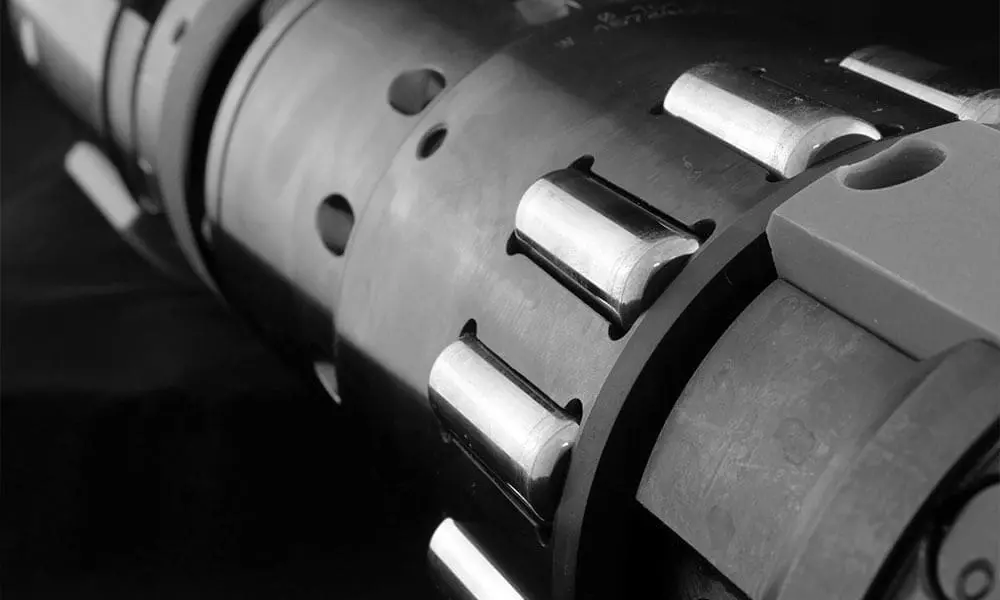
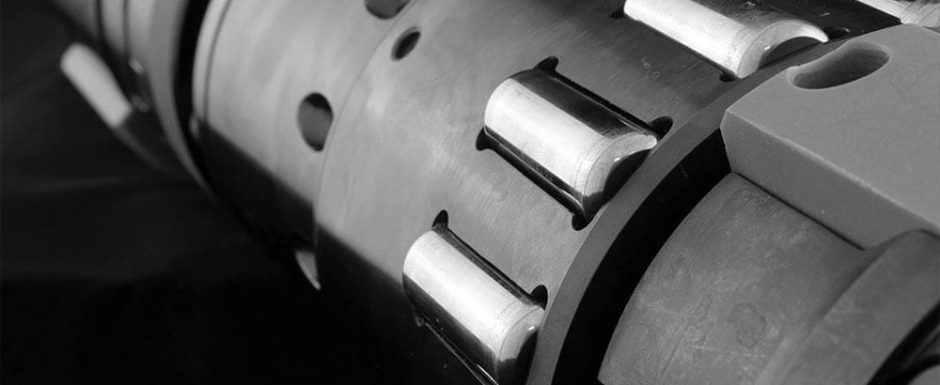
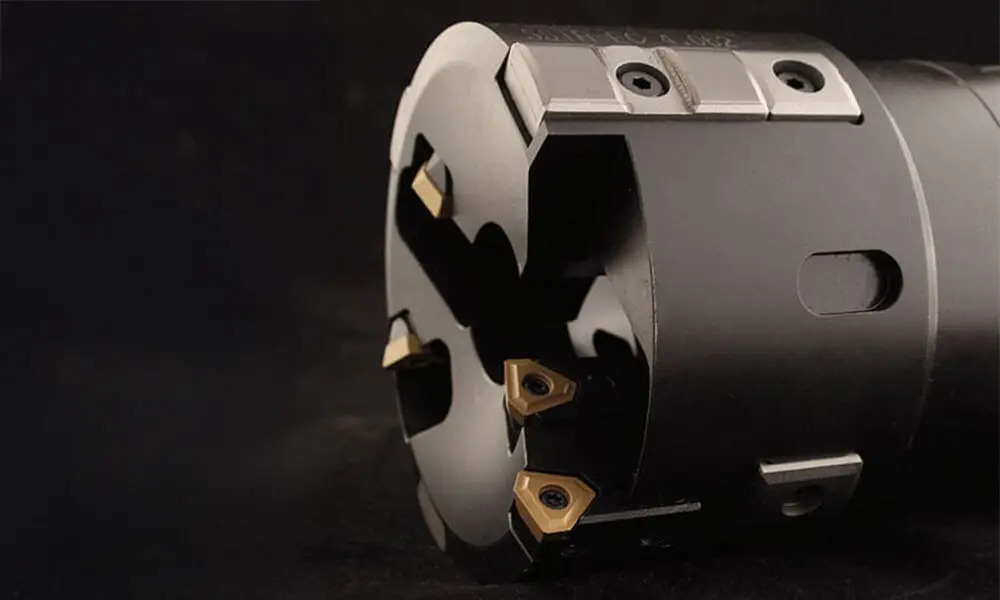
skiving and burnishing tool

Skiving and roller burnishing is one of the most surprisingly productive ways to achieve high-quality bore finishing in OEM production. Even experienced machinists are impressed when they see raw tubing converted into a mirror-like finish in a single pass at extremely high feed rates. This is achieved by combining two operations into a single tool and having the right machine for the job.

The process works by using a set of floating knives on the front of the tool, followed by rollers. The diameter and finish are adjustable on the head to “dial” in the exact sizes, and the finish can be tuned by adjusting the roller pressure relative to the cutting diameter. Cutting fluid floods the tool to clear chips, and hydraulic actuation protects the finished surface as the tool retracts. The process delivers outstanding accuracy, surface durability, and repeatability across a wide range of bore sizes and production environments.

ACHIEVABLE RESULTS

The result is a highly efficient method that routinely achieves:

  • Cutting speeds up to 300 m/min (1000 SFM)
  • Feed per revolution 3 mm/rev (0.118 IPR)
  • Feed rates over 4000 mm/min (157 IPM)
  • Surface roughness Ra in the 0.2-micro-meter (8-micro-inch) range
  • Circular form as close as 0.01mm (.0004 inch)
  • Diameter tolerance IT8 – IT9

These capabilities significantly enhance surface durability, a crucial factor in hydraulic cylinder manufacturing and other critical applications.

ACHIEVABLE RESULTS

The result is a highly efficient method that routinely achieves:

  • Cutting speeds up to 300 m/min (1000 SFM)
  • Feed per revolution 3 mm/rev (0.118 IPR)
  • Feed rates over 4000 mm/min (157 IPM)
  • Surface roughness Ra in the 0.2 micro-meter (8 micro-inch) range
  • Circular form as close as 0.01mm (.0004 inch)
  • Diameter tolerance IT8 – IT9

These capabilities significantly improve surface durability which is an important factor for hydraulic cylinder manufacturing and other critical applications.

"Skiving and roller burnishing combines two operations into a single tool."

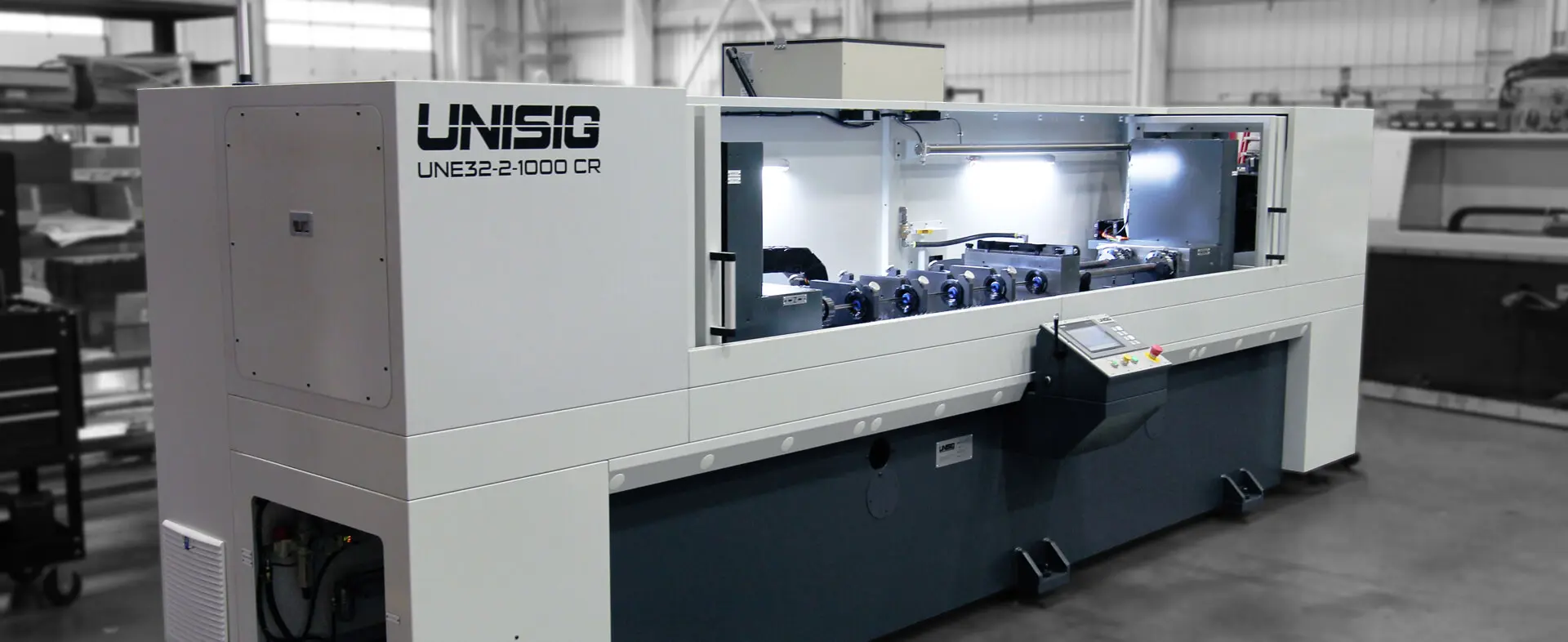
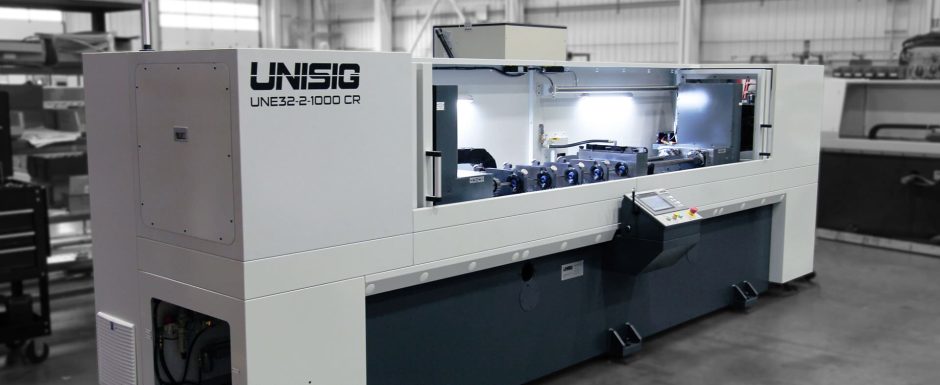
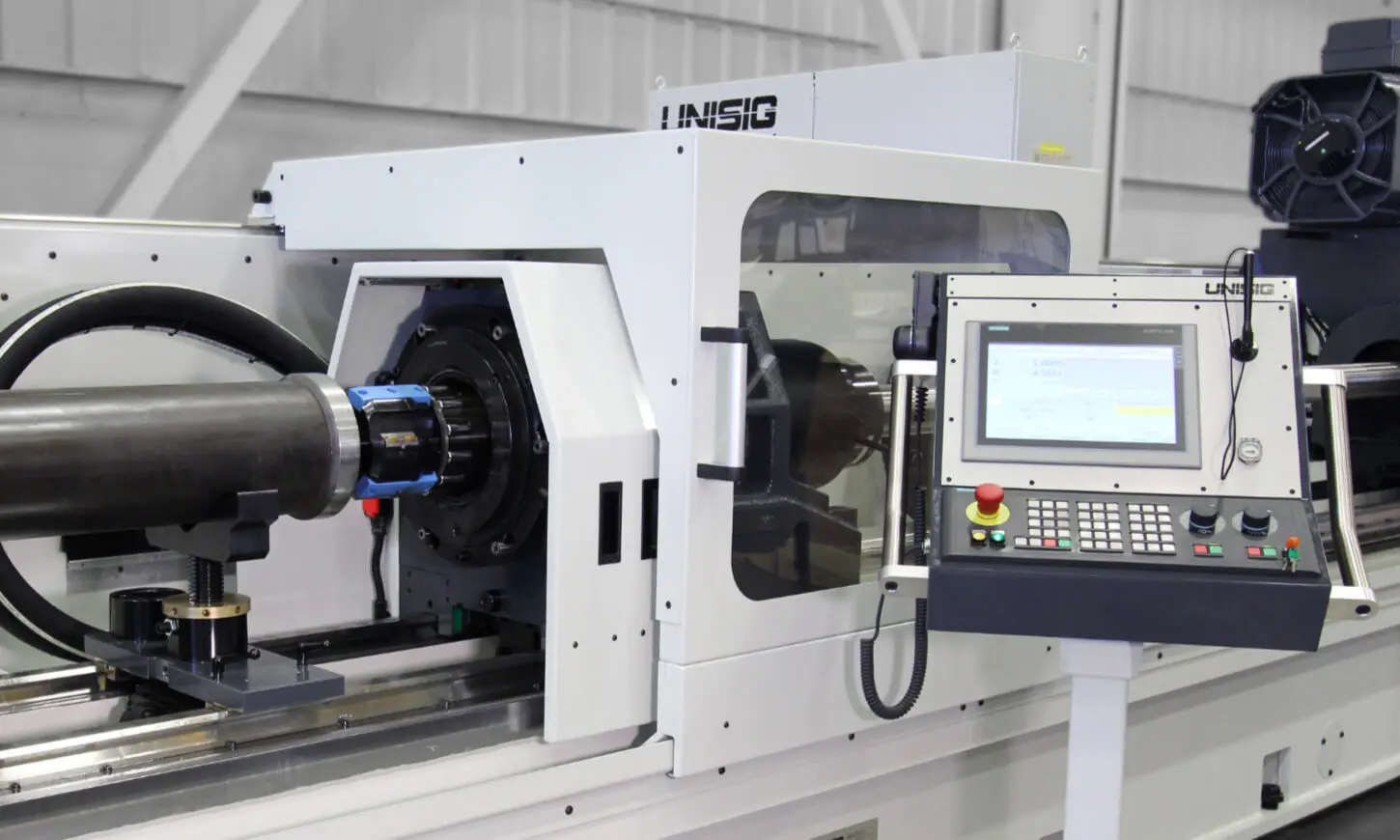
Skiving Burnishing Machine

APPLICATION AND PRODUCTION FLEXIBILITY

The process applies across a wide range of bore sizes and depths, from 30 to 500 mm (1.18 to 20 inches) and beyond 6 meters (20 feet). UNISIG has applied this method to depths over 13 meters (43 feet) in demanding oil and gas environments.

Most applications remove a small amount of material efficiently, typically around 1.5 mm (0.06 inches). When rough tubes require more cutting, a combined counterbore-skive-burnish tool may be used. Shorter parts can be processed vertically with separate skiving and burnishing tools, which simplifies setup and increases automation opportunities.

UNISIG MACHINES BUILT FOR THE PROCESS

Skiving and roller burnishing places significant demands on the machine platform, often requiring more than 100 kW (134 hp) at the tool. UNISIG machines are engineered to meet these requirements with power, rigidity, and long-term reliability.

  • S-Series machines are purpose-built for tube production, designed specifically around the skiving and roller burnishing process. Robot-ready configurations are available as a standard option.
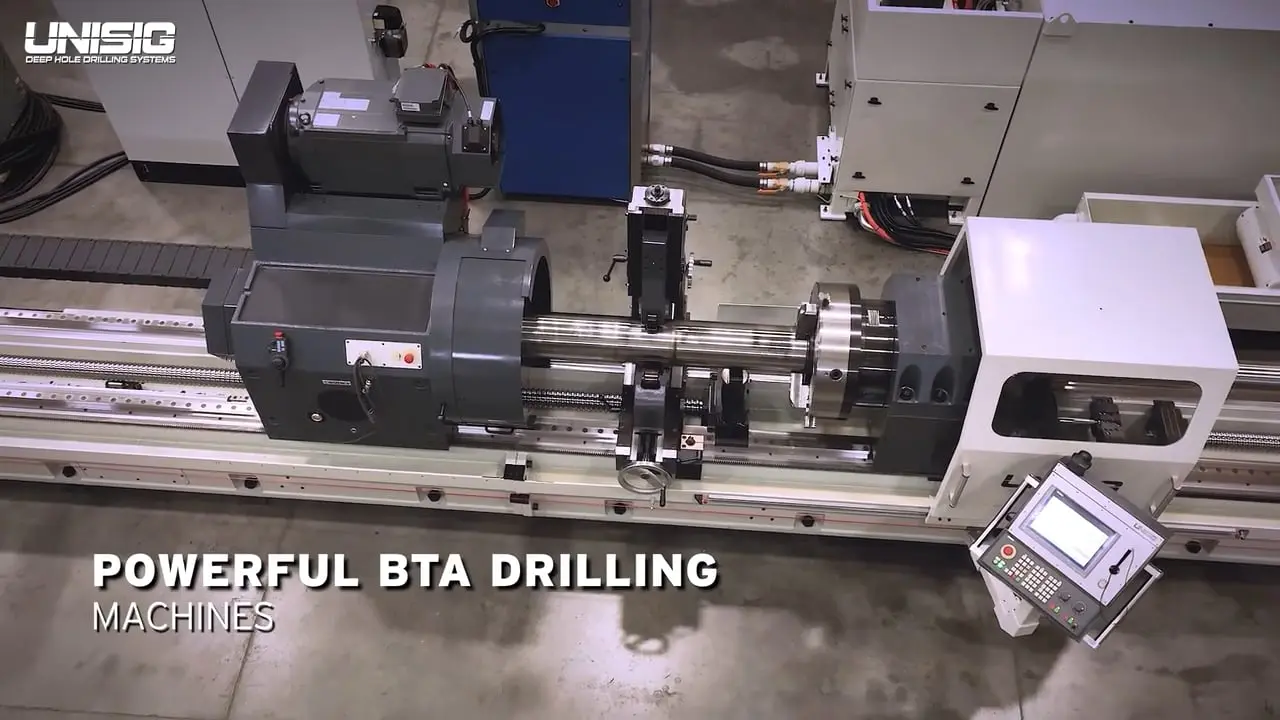
  • B-Series BTA deep hole drilling machines support both the creation of the starting bore and the final high-quality finish, offering manufacturers a single platform for multiple operations.

Although skiving and roller burnishing is not as common as conventional drilling, milling, or turning, it is a proven method to drastically increase productivity and quality. These machine platforms allow manufacturers to fully leverage the productivity and quality advantages in high-volume production environments.

APPLICATION RANGE AND PRODUCTION FLEXIBILITY

Skiving Burnishing Machine

The process applies across a wide range of bore sizes and depths, from 30 to 500 mm (1.18 to 20 inches) and beyond 6 meters (20 feet). UNISIG has applied this method to depths over 13 meters (43 feet) in demanding oil and gas environments.

Most applications remove a small amount of material efficiently, typically around 1.5 mm (0.06 inches). When rough tubes require more cutting, a combined counterbore-skive-burnish tool may be used. Shorter parts can be processed vertically with separate skiving and burnishing tools to simplify setup and increase automation opportunities.

UNISIG MACHINES BUILT FOR THE PROCESS

Skiving and roller burnishing places significant demands on the machine platform, often requiring more than 100 kW (134 hp) at the tool. UNISIG machines are engineered to meet these requirements with power, rigidity, and long-term reliability.

  • S-Series machines are purpose built for tube production, designed specifically around the skiving and roller burnishing process. Robot ready configurations are available as a standard option.
  • B-Series BTA deep hole drilling machines support both the creation of the starting bore and the final high quality finish, offering manufacturers a single platform for multiple operations.

Although skiving and roller burnishing is not as common as conventional drilling, milling or turning, it is a proven method to drastically increase productivity and quality. These machine platforms allow manufacturers to fully leverage the productivity and quality advantages in high volume production environments.

FREQUENTLY ASKED QUESTIONS

Skiving and roller burnishing combine cutting and finishing in a single tool, allowing raw tubing to be converted into a mirror-like finish in one pass. High feed rates, adjustable tool settings, and efficient chip evacuation allow the process to achieve speeds and quality levels that exceed conventional drilling, milling, or turning.

The process supports a wide range of bore diameters from 30 to 500 mm (1.18 to 20 inches) and depths beyond 6 meters (20 feet). UNISIG has applied skiving and roller burnishing to depths exceeding 13 meters (43 feet) in demanding applications.

UNISIG S-Series machines are purpose built for tube production and designed specifically around the skiving and roller burnishing process. B-Series BTA deep hole drilling machines can also integrate this capability, enabling manufacturers to produce both the starting bore and the final high quality finish on one platform.

Mechanically efficient designs run cooler, hold tighter tolerances, and last longer. UNISIG machines are engineered with this in mind. Axis drives use direct-drive servos or high-efficiency planetary gear reducers rather than worm drives or belts on axis drives. Our high-powered geared headstocks use precision-ground, constant-mesh helical gearing, and pumped synthetic lubrication to reduce friction and improve power transmission efficiency.
18

Nov

ENERGY EFFICIENCY AT UNISIG

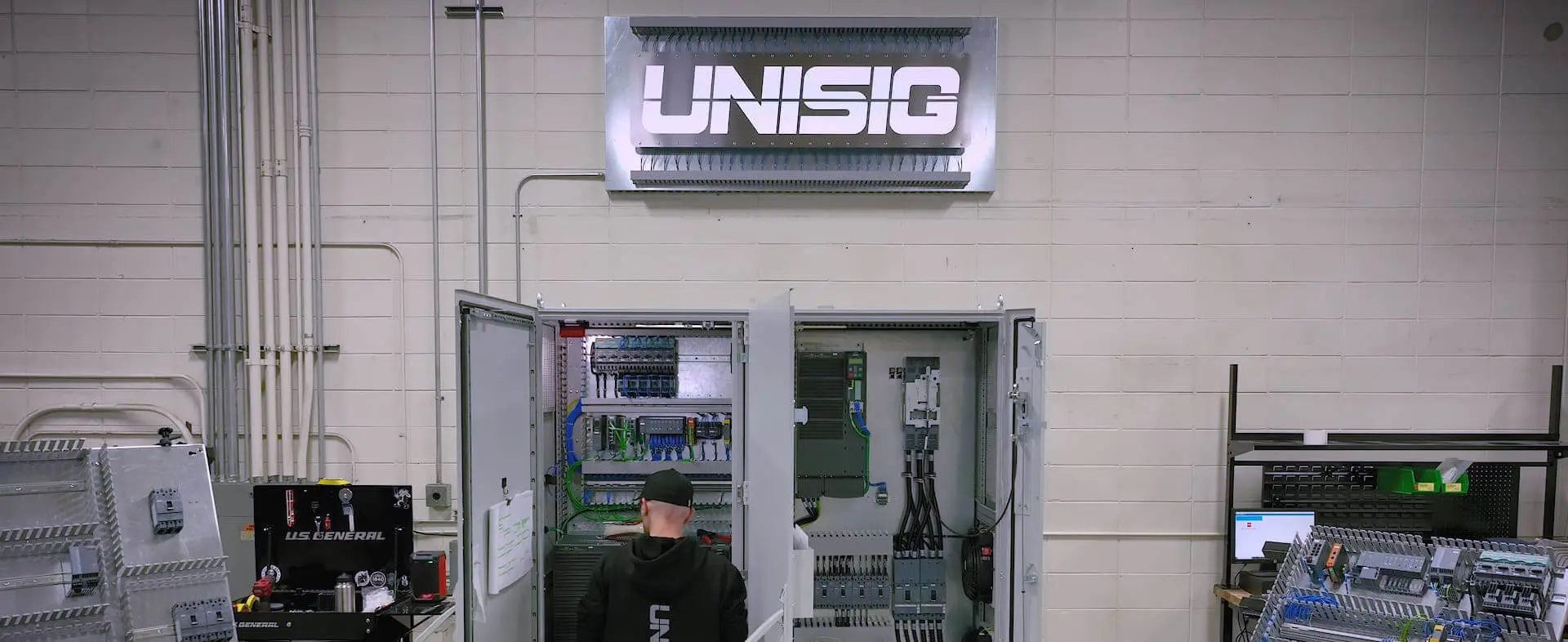
Energy Efficiency in the electrical engineering department

Energy efficiency is one area where everyone can agree. It is beneficial for the planet and for profits. A small gundrilling machine may have less than 20 horsepower, while a large BTA drilling machine can exceed 200 horsepower. Regardless of size, every kilowatt-hour of electricity matters. UNISIG designs machines with efficiency in mind because we believe that is how well-planned, modern machines should be built—through thoughtful engineering and design choices that reduce energy consumption and improve performance.

DESIGNING FOR MECHANICAL EFFICIENCY

Heat is the enemy. Mechanically efficient designs run cooler, hold tighter tolerances, and last longer. UNISIG machines are engineered with this in mind. Axis drives use direct-drive servos or high-efficiency planetary gear reducers rather than worm drives or belts on axis drives. Our high-powered geared headstocks utilize precision-ground, constant-mesh helical gearing and pumped synthetic lubrication to minimize friction and enhance power transmission efficiency. Our engineers focus on eliminating heat and inefficiencies at the source rather than consuming additional energy to remove them later.

DESIGNING FOR MECHANICAL EFFICIENCY

Heat is the enemy. Mechanically efficient designs run cooler, hold tighter tolerances, and last longer. UNISIG machines are engineered with this in mind. Axis drives use direct-drive servos or high-efficiency planetary gear reducers rather than worm drives or belts on axis drives. Our high-powered geared headstocks use precision-ground, constant-mesh helical gearing, and pumped synthetic lubrication to reduce friction and improve power transmission efficiency. Our engineers focus on eliminating heat and inefficiencies at the source rather than consuming even more energy to remove them later.

"Mechanically efficient designs run cooler, hold tighter tolerances, and last longer."

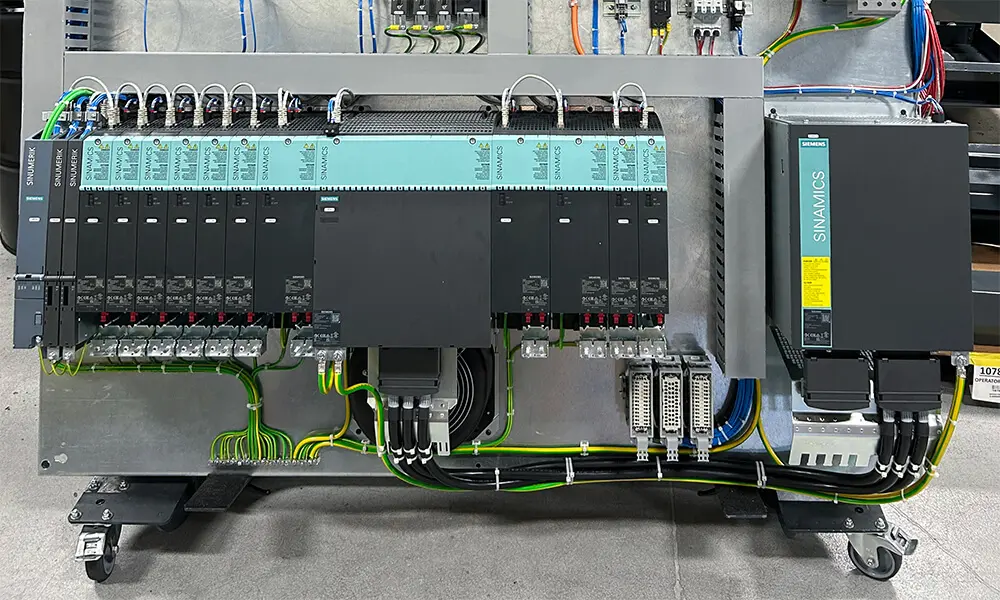
Panel B

SMART SYSTEMS THAT CONSERVE ENERGY

Variable Delivery Coolant Pumps: Deep hole drilling relies on cutting fluid at high pressures and flow rates to achieve accurate holes and reliable chip evacuation. If you are unsure how much is needed, you often apply too much, wasting energy in the process. Low-technology pumps rely on relief valves to regulate pressure, effectively functioning as heaters that never turn off. UNISIG high-pressure coolant pumps use variable speed drives and other variable volume delivery techniques to supply the exact amount of cutting fluid for the process, saving energy every minute the machines operate.

Regenerative Electrical Drives: When decelerating a load, the kinetic energy from moving mass must go somewhere. It can either be unloaded as heat into the braking system or conserved and reused. UNISIG uses regenerative drives for complex motion systems to conserve energy and improve dynamic performance. The motors paired with these high-technology drives offer exceptional efficiency and high power density. In many machine builds, UNISIG also employs drive systems (active line modules and active interface modules) with power factor correction and additional components to reduce electromagnetic interference, returning high-quality power to the grid.

LED Lighting: Machine enclosures are brightly lit to improve operator visibility during setup and prevent costly mistakes. UNISIG uses LED lighting, which consumes less energy and lasts longer than traditional lighting.

Sleep Modes: When idle, control systems automatically shut down transfer pumps and power units to conserve energy. Pneumatics are also turned off to prevent the use of unnecessary compressed air.

COMMITMENT BUILT INTO EVERY MACHINE

Energy efficiency is not a separate feature; it is built into every decision we make. Our repeat customers recognize the performance, precision, and service that define UNISIG, and our energy-efficient designs are simply part of the package. Thoughtful engineering, modern systems, and smarter power use all contribute to machines that run better, last longer, and deliver more value over their lifetime.

SMART SYSTEMS THAT CONSERVE ENERGY

Panel B

Variable Delivery Coolant Pumps: Deep hole drilling relies on cutting fluid at high pressures and flow rates to achieve accurate holes and reliable chip evacuation. If you are unsure how much is needed, you often apply too much, wasting energy in the process. Low-technology pumps rely on relief valves to regulate pressure, effectively becoming heaters that never turn off. UNISIG high-pressure coolant pumps use variable speed drives and other variable volume delivery techniques to supply exactly the right amount of cutting fluid for the process, saving energy every minute the machines run.

Regenerative Electrical Drives: When decelerating a load, the kinetic energy from moving mass must go somewhere. It can either be unloaded as heat into the braking system or conserved and reused. UNISIG uses regenerative drives for complex motion systems to conserve energy and improve dynamic performance. The motors paired with these high-technology drives offer exceptional efficiency and high power density. In many machine builds, UNISIG also employs drive systems (active line modules and active interface modules) with power factor correction and additional components to reduce electromagnetic interference, returning high quality power to the grid.

LED Lighting: Machine enclosures are brightly lit to improve operator visibility during setup and prevent costly mistakes. UNISIG uses LED lighting, which consumes less energy and lasts longer than traditional lighting.

Sleep Modes: When idle, control systems automatically shut down transfer pumps and power units to conserve energy. Pneumatics are also turned off to prevent unnecessary compressed air use.

COMMITMENT BUILT INTO EVERY MACHINE

Energy efficiency is not a separate feature, it is built into every decision we make. Our repeat customers recognize the performance, precision, and service that define UNISIG, and our energy-efficient designs are simply part of the package. Thoughtful engineering, modern systems, and smarter power use all contribute to machines that run better, last longer, and deliver more value over their lifetime.

FREQUENTLY ASKED QUESTIONS

Because efficiency impacts both performance and sustainability. Well-designed, efficient machines reduce waste, lower operating costs, and improve reliability.

They recover kinetic energy and, in many cases, return high-quality power to the grid.

Yes, positively. Efficient designs reduce heat, maintain precision, and extend component life, leading to improved accuracy and uptime.

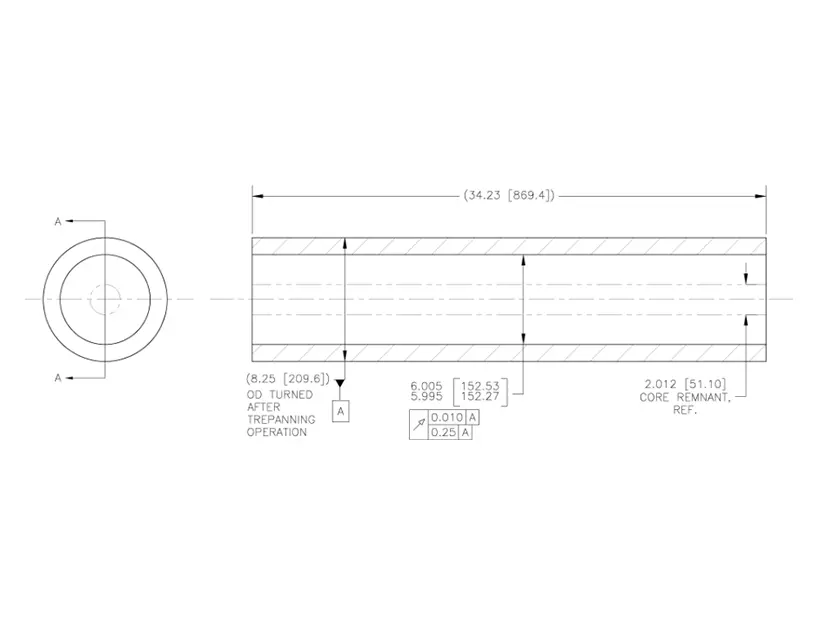
Trepanning is a process used to create a hole in a workpiece by machining only the outer area of the hole, leaving an unmachined core in the center. A BTA drill creates the same hole by turning all of the material into chips, leaving no core behind. This gives manufacturers two distinct ways to create a hole from solid material.
18

Nov

WHEN IS TREPANNING THE RIGHT CHOICE?

oil field manufacturing application example

Trepanning is a process that creates a hole in a workpiece by machining only the outer area of the hole, leaving an unmachined core in the center. In contrast, a BTA drill creates the same hole by turning all of the material into chips, leaving no core behind. This provides manufacturers with two distinct ways to create a hole from solid material.

BTA drilling is simple in concept: set up the machine, drill the hole, remove the workpiece, and empty the chip hopper when it’s full. Many manufacturers choose this process for its straightforward operation and the convenience of chip recycling. Trepanning isn’t necessarily more difficult, but it requires more operator involvement. When the hole is complete, the retained core must be removed from the tool between cycles.

Trepanning and BTA solid drilling share the same coolant delivery and chip evacuation systems. Coolant is introduced around the outside of the tool, and chips are exhausted through the drill tube. In BTA drilling, coolant passes freely through the tube, carrying chips to the conveyor. In trepanning, however, chips taken by the coolant must pass by the workpiece core inside the tube. The bore quality between the two methods can be similar, but it depends on the tool design. Trepanning tools with a sufficient cutting width to engage guide pads can achieve diameter tolerances similar to solid drilling. Tools designed for the narrowest width of cut (leaving the largest core) generally produce lower bore quality. For very deep holes, a counter-rotating tool and workpiece are often used. Because the trepanning core rotates with the workpiece, it can create challenges related to vibration or unexpected loading. Once these differences are understood, the key question becomes: When is trepanning the right choice?


ADVANTAGES OF TREPANNING

Saving the Core: One of the most significant advantages of trepanning is the ability to retain the core. The core may hold value for quality inspection or certification of critical parts. Because it originates from the same piece of raw material as the finished component, metallurgical samples can be documented or kept as a coupon for future evaluation if a finished part fails. In some cases, the core can be repurposed as a smaller workpiece, offering an economic advantage. Depending on size and material, the scrap value of the core may even exceed that of chips created through solid drilling.

Less Power for Machining (Sometimes): When the center of the workpiece isn’t machined away, machining forces can be reduced compared to solid drilling. This advantage is most evident when the tool is cutting a narrow width relative to the hole size and the depth isn’t great enough for the core to bend or rub inside the drill tube, which would otherwise create friction and require more power.

Better Economics in Tooling: Since trepanning does not machine the hole center, a center carbide insert isn’t required, and in some cases, the intermediate insert can also be eliminated. This can lead to significant tooling cost savings in production environments.

ADVANTAGES OF TREPANNING

Saving the Core: One of the most significant advantages of trepanning is the ability to retain the core. The core may hold value for quality inspection or certification of critical parts. Because it originates from the same piece of raw material as the finished component, metallurgical samples can be documented or kept as a coupon for future evaluation if a finished part fails. In some cases, the core can be repurposed as a smaller workpiece, offering an economic advantage. Depending on size and material, the scrap value of the core may even exceed that of chips created through solid drilling.

Less Power for Machining (Sometimes): When the center of the workpiece isn’t machined away, machining forces can be reduced compared to solid drilling.This advantage is most evident when the tool is cutting a narrow width relative to the hole size and the depth isn’t great enough for the core to bend or rub inside the drill tube, which would otherwise create friction and require more power.

Better Economics in Tooling: Because trepanning does not machine the hole center, a center carbide insert isn’t required, and in some cases, the intermediate insert can also be eliminated. This can lead to significant tooling cost savings in production environments.

“Trepanning is not just an alternative to BTA drilling—it’s a strategic choice when core recovery, power efficiency, or tooling economy align with production goals.”

trepanning machine application for oil field

LIMITATIONS AND CONSIDERATIONS

Core Management: Managing and removing the core can be challenging, especially in long workpieces. The end face of the core typically has a sharp, blade-like edge from the final cut. Operators should be properly trained and handle the cores carefully to avoid injury, and the cores must be safely managed as they move through the plant after drilling. The tool head can also be damaged during core removal. Carbide inserts and cartridges should be inspected after each cycle to ensure they are ready for the next workpiece.

Cutting Insert Changes During the Cut: If a cutting insert dulls during trepanning, it’s difficult to index the insert mid-cycle. The tool must be retracted, often with the core still in contact with the inserts that were cutting it. In contrast, a solid-drilled hole allows the tool to be backed out, inserts replaced, and drilling resumed more easily.

Blind Holes: When a hole extends completely through the part, trepanning is straightforward to implement. When a hole is blind—only partially into the workpiece—the core remains attached at the bottom. Special core-breaking strategies or core-cropping tools can separate the core, but these add process complexity.

Chip Clearance Between Core and Drill Tube: The trepanning process leaves a core in the center of the drill tube while producing the hole, which has to compete for space with the chips exiting through the tool. Chip control is crucial, as is managing the wall thickness of the drill tube to ensure compatibility with the trepanning head, targeted hole size, and cutting width.

EQUIPMENT FOR TREPANNING

Many older trepanning machines were designed around lower power requirements and may not be suitable for modern BTA solid drilling. Likewise, trepanning tools designed for high penetration rates or small cores can stress older machines not built for that level of performance. UNISIG B-Series machines are designed to support both trepanning and BTA solid drilling. This gives manufacturers flexibility to choose the process that best fits their production goals—whether prioritizing material recovery, process efficiency, or overall machine utilization.

LIMITATIONS AND CONSIDERATIONS

trepanning machine application for oil field

Core Management: Managing and removing the core can be challenging, especially in long workpieces. The end face of the core typically has a sharp, blade-like edge from the final cut. Operators should be properly trained and handle the cores carefully to avoid injury, and the cores must be safely managed as they move through the plant after drilling. The tool head can also be damaged during core removal. Carbide inserts and cartridges should be inspected after each cycle to ensure readiness for the next workpiece.

Cutting Insert Changes During the Cut: If a cutting insert dulls during trepanning, it’s difficult to index the insert mid-cycle. The tool must be retracted, often with the core still in contact with the inserts that were cutting it. In contrast, a solid-drilled hole allows the tool to be backed out, inserts replaced, and drilling resumed more easily.

Blind Holes: When a hole goes all the way through the part, trepanning is straightforward to implement. When a hole is blind—only partially into the workpiece—the core remains attached at the bottom. Special core-breaking strategies or core-cropping tools can separate the core, but these add process complexity.

Chip Clearance Between Core and Drill Tube: The trepanning process will leave a core in the center of the drill tube while producing the hole, which has to compete for space with the chips exiting through the tool. Chip control is very important, as is managing the wall thickness of the drill tube to be compatible with the trepanning head, targeted hole size, and cutting width.

EQUIPMENT FOR TREPANNING

Many older trepanning machines were designed around lower power requirements and may not be suitable for modern BTA solid drilling. Likewise, trepanning tools designed for high penetration rates or small cores can stress older machines not built for that level of performance. UNISIG B-Series machines are designed to support both trepanning and BTA solid drilling. This gives manufacturers flexibility to choose the process that best fits their production goals—whether prioritizing material recovery, process efficiency, or overall machine utilization.

FREQUENTLY ASKED QUESTIONS

Trepanning is ideal when core recovery or reduced tooling cost is valuable, or when material properties must be preserved for testing or reuse.

It’s possible, but challenging. Specialized core-breaking or cropping tools are required to separate the core, which adds time and complexity.

Machines must be powerful, and designed for core handling. UNISIG B-Series machines can perform both trepanning and BTA drilling, offering flexibility for different applications.

Every company that builds advanced technology products is chasing engineering innovation, looking for clever and practical designs that separate them from the competition. Precision machine tools and automation have evolved to incredible levels because of constant competitive pressure, but that same pressure can leave design engineers searching for fresh inspiration.
05

Nov

MANUFACTURING INNOVATION DRIVES ENGINEERING INNOVATION

Entrust Okuma lights out machining w logo

Every company that builds advanced technology products is chasing engineering innovation, looking for clever and practical designs that separate them from the competition. Precision machine tools and automation have evolved to incredible levels because of constant competitive pressure, but that same pressure can leave design engineers searching for fresh inspiration.

Where does true design innovation come from? While inspiration can occasionally strike out of nowhere, relying on those rare moments is not a sustainable strategy when your profession demands a consistent output of high-quality designs. One of the most reliable and enduring sources of engineering innovation comes from a strong, ongoing connection to manufacturing.

INNOVATION MEETS REALITY

Physics is the ultimate equalizer, and bad ideas rarely survive contact with it. When components are difficult to manufacture, costs rise, quality falls, and reliability suffers. Engineers who stay closely involved with manufacturing learn lessons that sharpen their instincts and shape their decisions. These lessons form the foundation of great engineering work.

Even more exciting, manufacturing technology continuously expands what is possible. Staying connected to those advancements gives engineers a steady stream of inspiration and practical ideas.

INNOVATION MEETS REALITY

Physics is the ultimate equalizer, and bad ideas rarely survive contact with it. When components are difficult to manufacture, costs rise, quality falls, and reliability suffers. Engineers who stay closely involved with manufacturing learn lessons that sharpen their instincts and shape their decisions. These lessons form the foundation of great engineering work.

Even more exciting, manufacturing technology continuously expands what is possible. Staying connected to those advancements gives engineers a steady stream of inspiration and practical ideas.

“We have an endless source of engineering innovation that comes directly from innovations in manufacturing.”

MANUFACTURING EXPANDS POSSIBILITIES

Every improvement in manufacturing capability unlocks new options for engineering design.

  • A modular fixturing system might enable engineers to design parts with more features machined in a single setup, improving accuracy, reducing part counts, and simplifying final machine alignment.
  • A large machine with five-sided machining capabilities can inspire designs that minimize disassembly for faster installation at a customer site.
  • Micron accuracy cylindrical and contour grinding make higher speeds and greater precision attainable.

If you are not regularly talking to the machinists who make these technologies work, you are missing opportunities for innovation.

KEEPING ENGINEERING AND MANUFACTURING TOGETHER

The best companies do not leave collaboration to chance; they build it into their operations. Encouraging, or even requiring, ongoing engagement between design engineering and manufacturing ensures that both teams grow together. This collaboration works best when both are under the same roof.

At UNISIG, we live this philosophy. A management directive mandates that we build our critical components in-house. We invest in machinery, technology, people, and training to remain at the leading edge of manufacturing, not just in assembly. Because our engineers and manufacturing professionals work side by side, we maintain complete control of production and gain a constant flow of new ideas from the shop floor to the design desk.

MANUFACTURING EXPANDS POSSIBILITIES

Every improvement in manufacturing capability unlocks new options for engineering design.

  • A modular fixturing system might enable engineers to design parts with more features machined in a single setup, improving accuracy, reducing part counts, and simplifying final machine alignment.
  • A large machine with five-sided machining capabilities can inspire designs that minimize disassembly for faster installation at a customer site.
  • Micron accuracy cylindrical and contour grinding make higher speeds and greater precision attainable.

If you are not regularly talking to the machinists who make these technologies work, you are missing opportunities for innovation.

KEEPING ENGINEERING AND MANUFACTURING TOGETHER

The best companies do not leave collaboration to chance; they build it into their operations. Encouraging, or even requiring, ongoing engagement between design engineering and manufacturing ensures that both teams grow together. This collaboration works best when both are under the same roof.

At UNISIG, we live this philosophy. A management directive mandates that we build our critical components in-house. We invest in machinery, technology, people, and training to remain at the leading edge of manufacturing, not just in assembly. Because our engineers and manufacturing professionals work side by side, we maintain complete control of production and gain a constant flow of new ideas from the shop floor to the design desk.

FREQUENTLY ASKED QUESTIONS

Manufacturing advancements expand what is physically possible to build. When engineers stay connected to the shop floor, they gain real-world insights about materials, processes, and tolerances that influence smarter, more efficient designs.

Close collaboration ensures that designs are practical, efficient to produce, and optimized for quality and performance. When both teams operate in the same facility, feedback flows naturally, leading to faster innovation and fewer design challenges.

UNISIG builds its critical components in-house, investing in advanced machinery, technology, and training. By keeping manufacturing and engineering under one roof, the company maintains full control over production and continuously drives innovation in both areas.

Landmann has managed UNISIG’s Midwest sales region for over a decade, during which his success has helped strengthen the company's worldwide reputation for delivering robust, customer-focused solutions to deep hole drilling applications.
08

Sep

UNISIG Promotes Steve Landmann to Vice President of Sales

Menomonee Falls, WI – September 8, 2025 – UNISIG Deep Hole Drilling Systems, a leading global manufacturer of deep hole drilling machines and automation systems, has promoted Steve Landmann to Vice President of Sales.

Landmann has managed UNISIG’s Midwest sales region for over a decade, during which his success has helped strengthen the company’s worldwide reputation for delivering robust, customer-focused solutions to deep hole drilling applications. His unique perspective is shaped by experience in predictive maintenance, machine building, and installation, giving him a deep understanding of customer challenges and long-term needs. In his new role, he will lead UNISIG’s sales team while working closely with management to maintain strong results, anticipate and adapt to evolving customer needs, and reinforce the company’s reputation for professionalism and solution-driven selling in high-value equipment markets.

“I’ve worked closely with Steve for more than 10 years and have always been impressed by his advocacy and dedication to our customers, his talent for solving complex problems, and his commitment to advancing UNISIG solutions,” said Anthony Fettig, CEO. “I’m confident he will provide outstanding leadership as he guides our sales team into the future.”

“I want UNISIG to lean even more heavily into what has always made us strong—an unwavering focus on the customer. That means putting customer needs, satisfaction, and complete care at the center of everything we do,” said Landmann. “My goal is to drive an almost obsessive customer focus that reinforces UNISIG’s reputation for innovation and solving the most complex deep hole drilling challenges.”

Landmann succeeds Jeff Price, who will retire in December, after more than 22 years as Vice President of Sales. Price played a pivotal role in the development of UNISIG, increasing its global footprint in the industry and driving the growth that enabled the company to continually expand its capabilities.

“Jeff’s leadership and dedication were instrumental in building UNISIG into the company it is today,” said Fettig. “We thank him for his many contributions and wish him the very best in retirement.”

About UNISIG
UNISIG is a leading manufacturer of deep hole drilling machines and automation systems. Engineered and manufactured in the USA, its machines serve industries ranging from aerospace to medical to moldmaking. Known for engineering innovation and in-house manufacturing capabilities, UNISIG combines precision, performance, and reliability in everything it delivers. For more information, visit www.UNISIG.com

Steve Landmann has been promoted to Vice President of Sales at UNISIG. He has over a decade of experience managing the Midwest sales region, where he contributed significantly to strengthening UNISIG’s reputation for delivering robust, customer-focused solutions. In his new role, he will lead the global sales team and work closely with management to anticipate evolving customer needs and reinforce the company’s leadership in deep hole drilling solutions.

Landmann brings a unique perspective shaped by his experience in predictive maintenance, machine building, and installation. This hands-on background gives him a deep understanding of customer challenges and long-term needs, positioning him to continue UNISIG’s tradition of solution-driven selling in high-value equipment markets.

Landmann succeeds Jeff Price, who is retiring in December after more than 22 years as Vice President of Sales. Price played a pivotal role in UNISIG’s global footprint and long-term growth. This transition ensures continuity while also advancing UNISIG’s customer-focused strategy under new leadership.