

Trepanning is a process used to create a hole in a workpiece by machining only the outer area of the hole, leaving an unmachined core in the center. A BTA drill creates the same hole by turning all of the material into chips, leaving no core behind. This gives manufacturers two distinct ways to create a hole from solid material.
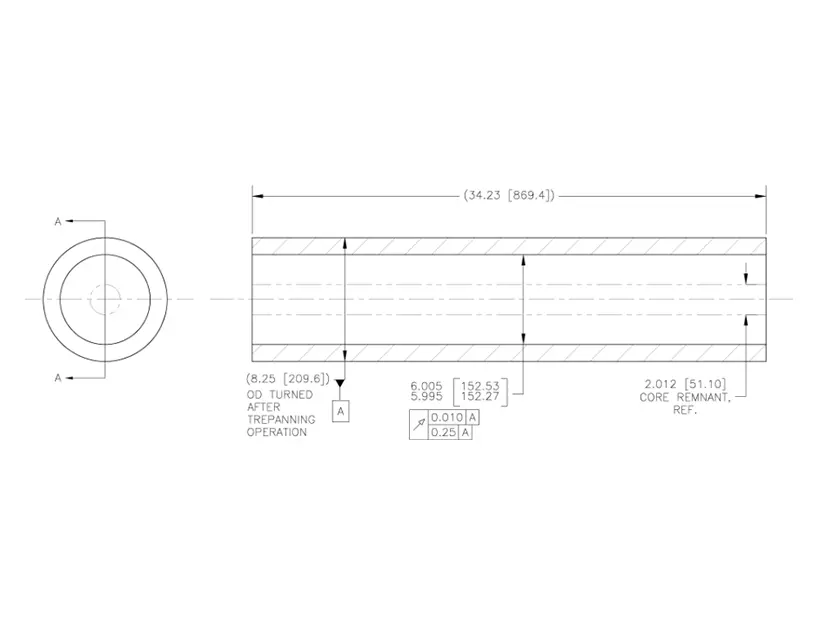
oil field manufacturing application example

WHEN IS TREPANNING THE RIGHT CHOICE?

oil field manufacturing application example

Trepanning is a process that creates a hole in a workpiece by machining only the outer area of the hole, leaving an unmachined core in the center. In contrast, a BTA drill creates the same hole by turning all of the material into chips, leaving no core behind. This provides manufacturers with two distinct ways to create a hole from solid material.

BTA drilling is simple in concept: set up the machine, drill the hole, remove the workpiece, and empty the chip hopper when it’s full. Many manufacturers choose this process for its straightforward operation and the convenience of chip recycling. Trepanning isn’t necessarily more difficult, but it requires more operator involvement. When the hole is complete, the retained core must be removed from the tool between cycles.

Trepanning and BTA solid drilling share the same coolant delivery and chip evacuation systems. Coolant is introduced around the outside of the tool, and chips are exhausted through the drill tube. In BTA drilling, coolant passes freely through the tube, carrying chips to the conveyor. In trepanning, however, chips taken by the coolant must pass by the workpiece core inside the tube. The bore quality between the two methods can be similar, but it depends on the tool design. Trepanning tools with a sufficient cutting width to engage guide pads can achieve diameter tolerances similar to solid drilling. Tools designed for the narrowest width of cut (leaving the largest core) generally produce lower bore quality. For very deep holes, a counter-rotating tool and workpiece are often used. Because the trepanning core rotates with the workpiece, it can create challenges related to vibration or unexpected loading. Once these differences are understood, the key question becomes: When is trepanning the right choice?

ADVANTAGES OF TREPANNING
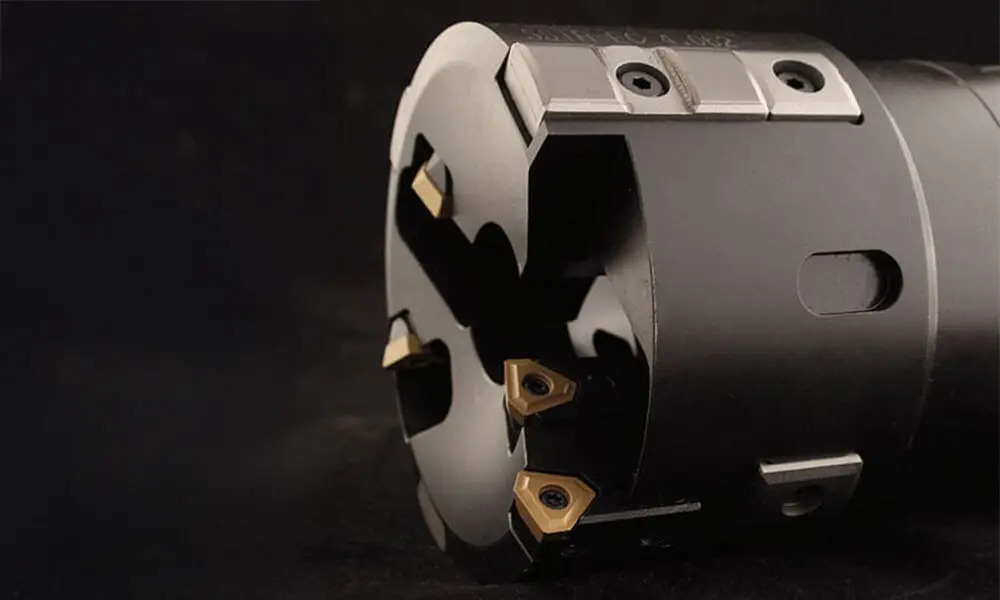
Saving the Core: One of the most significant advantages of trepanning is the ability to retain the core. The core may hold value for quality inspection or certification of critical parts. Because it originates from the same piece of raw material as the finished component, metallurgical samples can be documented or kept as a coupon for future evaluation if a finished part fails. In some cases, the core can be repurposed as a smaller workpiece, offering an economic advantage. Depending on size and material, the scrap value of the core may even exceed that of chips created through solid drilling.

Less Power for Machining (Sometimes): When the center of the workpiece isn’t machined away, machining forces can be reduced compared to solid drilling. This advantage is most evident when the tool is cutting a narrow width relative to the hole size and the depth isn’t great enough for the core to bend or rub inside the drill tube, which would otherwise create friction and require more power.

Better Economics in Tooling: Since trepanning does not machine the hole center, a center carbide insert isn’t required, and in some cases, the intermediate insert can also be eliminated. This can lead to significant tooling cost savings in production environments.

ADVANTAGES OF TREPANNING

Saving the Core: One of the most significant advantages of trepanning is the ability to retain the core. The core may hold value for quality inspection or certification of critical parts. Because it originates from the same piece of raw material as the finished component, metallurgical samples can be documented or kept as a coupon for future evaluation if a finished part fails. In some cases, the core can be repurposed as a smaller workpiece, offering an economic advantage. Depending on size and material, the scrap value of the core may even exceed that of chips created through solid drilling.

Less Power for Machining (Sometimes): When the center of the workpiece isn’t machined away, machining forces can be reduced compared to solid drilling.This advantage is most evident when the tool is cutting a narrow width relative to the hole size and the depth isn’t great enough for the core to bend or rub inside the drill tube, which would otherwise create friction and require more power.

Better Economics in Tooling: Because trepanning does not machine the hole center, a center carbide insert isn’t required, and in some cases, the intermediate insert can also be eliminated. This can lead to significant tooling cost savings in production environments.

“Trepanning is not just an alternative to BTA drilling—it’s a strategic choice when core recovery, power efficiency, or tooling economy align with production goals.”

trepanning machine application for oil field

LIMITATIONS AND CONSIDERATIONS

Core Management: Managing and removing the core can be challenging, especially in long workpieces. The end face of the core typically has a sharp, blade-like edge from the final cut. Operators should be properly trained and handle the cores carefully to avoid injury, and the cores must be safely managed as they move through the plant after drilling. The tool head can also be damaged during core removal. Carbide inserts and cartridges should be inspected after each cycle to ensure they are ready for the next workpiece.

Cutting Insert Changes During the Cut: If a cutting insert dulls during trepanning, it’s difficult to index the insert mid-cycle. The tool must be retracted, often with the core still in contact with the inserts that were cutting it. In contrast, a solid-drilled hole allows the tool to be backed out, inserts replaced, and drilling resumed more easily.

Blind Holes: When a hole extends completely through the part, trepanning is straightforward to implement. When a hole is blind—only partially into the workpiece—the core remains attached at the bottom. Special core-breaking strategies or core-cropping tools can separate the core, but these add process complexity.

Chip Clearance Between Core and Drill Tube: The trepanning process leaves a core in the center of the drill tube while producing the hole, which has to compete for space with the chips exiting through the tool. Chip control is crucial, as is managing the wall thickness of the drill tube to ensure compatibility with the trepanning head, targeted hole size, and cutting width.

EQUIPMENT FOR TREPANNING

Many older trepanning machines were designed around lower power requirements and may not be suitable for modern BTA solid drilling. Likewise, trepanning tools designed for high penetration rates or small cores can stress older machines not built for that level of performance. UNISIG B-Series machines are designed to support both trepanning and BTA solid drilling. This gives manufacturers flexibility to choose the process that best fits their production goals—whether prioritizing material recovery, process efficiency, or overall machine utilization.

LIMITATIONS AND CONSIDERATIONS

trepanning machine application for oil field

Core Management: Managing and removing the core can be challenging, especially in long workpieces. The end face of the core typically has a sharp, blade-like edge from the final cut. Operators should be properly trained and handle the cores carefully to avoid injury, and the cores must be safely managed as they move through the plant after drilling. The tool head can also be damaged during core removal. Carbide inserts and cartridges should be inspected after each cycle to ensure readiness for the next workpiece.

Cutting Insert Changes During the Cut: If a cutting insert dulls during trepanning, it’s difficult to index the insert mid-cycle. The tool must be retracted, often with the core still in contact with the inserts that were cutting it. In contrast, a solid-drilled hole allows the tool to be backed out, inserts replaced, and drilling resumed more easily.

Blind Holes: When a hole goes all the way through the part, trepanning is straightforward to implement. When a hole is blind—only partially into the workpiece—the core remains attached at the bottom. Special core-breaking strategies or core-cropping tools can separate the core, but these add process complexity.

Chip Clearance Between Core and Drill Tube: The trepanning process will leave a core in the center of the drill tube while producing the hole, which has to compete for space with the chips exiting through the tool. Chip control is very important, as is managing the wall thickness of the drill tube to be compatible with the trepanning head, targeted hole size, and cutting width.

EQUIPMENT FOR TREPANNING

Many older trepanning machines were designed around lower power requirements and may not be suitable for modern BTA solid drilling. Likewise, trepanning tools designed for high penetration rates or small cores can stress older machines not built for that level of performance. UNISIG B-Series machines are designed to support both trepanning and BTA solid drilling. This gives manufacturers flexibility to choose the process that best fits their production goals—whether prioritizing material recovery, process efficiency, or overall machine utilization.

FREQUENTLY ASKED QUESTIONS

Trepanning is ideal when core recovery or reduced tooling cost is valuable, or when material properties must be preserved for testing or reuse.

It’s possible, but challenging. Specialized core-breaking or cropping tools are required to separate the core, which adds time and complexity.

Machines must be powerful, and designed for core handling. UNISIG B-Series machines can perform both trepanning and BTA drilling, offering flexibility for different applications.

Share this story!